
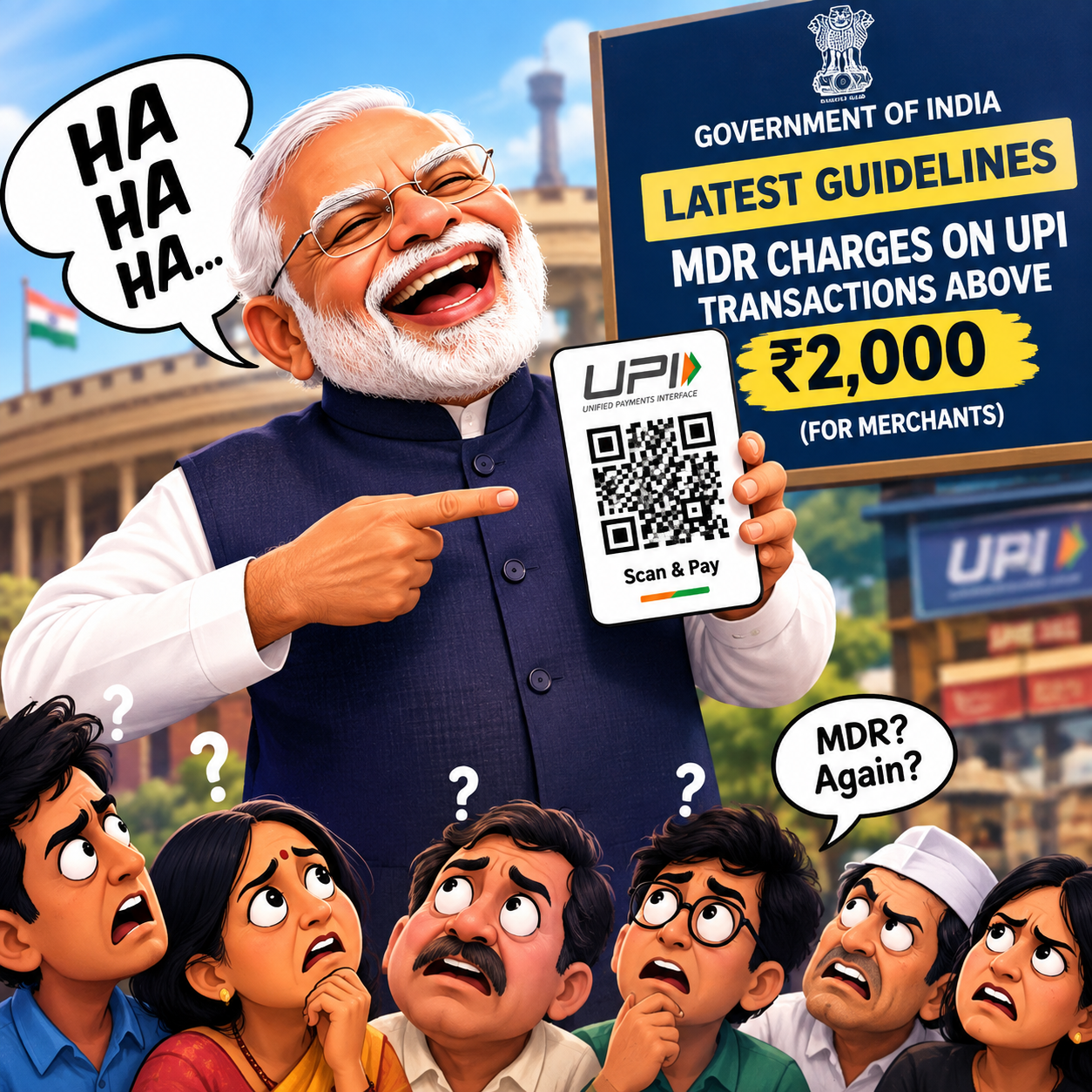
Ashneer Grover on UPI MDR: “Call It Tax, End of the Day Consumer Pays”
Former BharatPe co-founder Ashneer Grover UPI MDR comments have sparked a national debate over the government’s latest payment guidelines regarding Merchant Discount Rate (MDR) charges on Unified Payments Interface (UPI) transactions above ₹2,000.
In viral television appearances and sharp posts on X, Grover dismantled the narrative that charging merchants spares ordinary users, arguing that every operational levy in the supply chain ultimately transfers straight to retail buyers.
The Viral Quotes That Broke the Internet
1. “Then Call It Tax—Why Sugarcoat It?”
Responding to official statements that UPI charges will not affect common citizens because person-to-person (P2P) transfers remain free:
“Then call it tax. Why are you calling it a ‘charge’, ‘MDR’, or claiming that it won’t affect the customer? At the end of the day, who pays? Whether it is tax or any other charge, the consumer pays.”
Grover compared merchant charges to fuel excise duties—even if levied on oil marketing firms or refineries, the driver at the petrol pump foots the final bill.
2. “Doodh Ka Doodh, Paani Ka Paani”
Grover posted balance sheet figures to challenge claims that UPI requires a subsidy recovery:
-
RBI Surplus Transfer: Over ₹2.87 lakh crore transferred to the government.
-
Bank Earnings: Listed banks reported combined annual profits topping ₹4.11 lakh crore.
-
NPCI Reserves: Over ₹1,888 crore in pre-tax operating profit with cash reserves exceeding ₹6,000 crore.
-
ATM Logistics Overhead: India spends over ₹30,500 crore annually maintaining ATMs and cash transit. Promoting free UPI saves massive systemic capital instead of draining it.
What the New UPI Framework Actually Says
The Ministry of Finance and NPCI clarified the upcoming MDR guidelines:
| UPI Transaction Type | Fee Status | Impact on User |
| P2P (Friend to Friend / Family) | Zero Charges (Free) | Completely unaffected |
| Small Merchants (< ₹2,000) | Zero MDR | ~96% of retail scan-and-pay transactions remain free. |
| Merchant Payments (> ₹2,000) | Capped at 0.4% (max ₹300) | Borne by designated merchants |
Why Grover Calls MDR a “Regressive Step”
Grover warned that tampering with the zero-MDR setup risks hurting one of India’s most successful digital innovations:
-
Cash Relapse: If merchants face deductions on high-ticket sales (electronics, apparel, jewelry), they will incentivize customers to pay via physical cash or unrecorded channels, weakening digital compliance.
-
Hidden Surcharges: Retailers might introduce card-style dual pricing (e.g., charging 0.5% extra if you scan a QR code for items above ₹2,000), effectively eroding consumer trust in UPI.
Key Takeaway for Consumers
While everyday grocery scans and small bill payments remain completely cost-free, Grover’s statements highlight the core economic reality: businesses rarely absorb financial transaction friction—they adjust baseline retail pricing to compensate.
### What Does It Mean for Everyday Merchants?
For small street vendors, grocery stores, and neighborhood stalls processing transactions under ₹2,000, zero-MDR keeps digital adoption friction-free. However, mid-sized retailers handling electronics, jewelry, and white goods could feel the impact if payment aggregators deduct fees on high-ticket sales.
When payment processing expenses rise, merchants typically manage the difference by adjusting profit margins, restricting seasonal discounts, or incentivizing customers toward direct bank transfers rather than UPI QR code scans.
### What Does It Mean for Small Business Owners?
For kirana stores, neighborhood cafes, and small vendors processing transactions under ₹2,000, zero-MDR keeps digital adoption frictionless. However, mid-sized and large retailers handling high-value orders could feel the pinch if transaction aggregators levy fees.
When transaction costs increase, businesses often offset the expense through slight markups, reduced discounts, or by encouraging direct bank-to-bank NEFT/IMPS transfers instead of merchant UPI scans.
Consumers should monitor their digital payment receipts regularly to ensure no unauthorized convenience surcharges are added during checkout.
Top Dividend Yield Stocks in India